Electric Outboard Review
LiTime ArgoSeeker A2 Review
LiTime built its name on lithium batteries. Now they’ve built their first electric outboard: a 48-volt, 2000-watt motor with a wireless remote, 120 pounds of thrust, and a 16.5-pound body. Here’s what the specs say, what the battery math says, and who should actually buy it.
Affiliate disclosure: KayakDIY may earn a commission from qualifying purchases made through links in this article, at no additional cost to the reader. Product availability, pricing, and promo codes can change; verify them before purchasing.
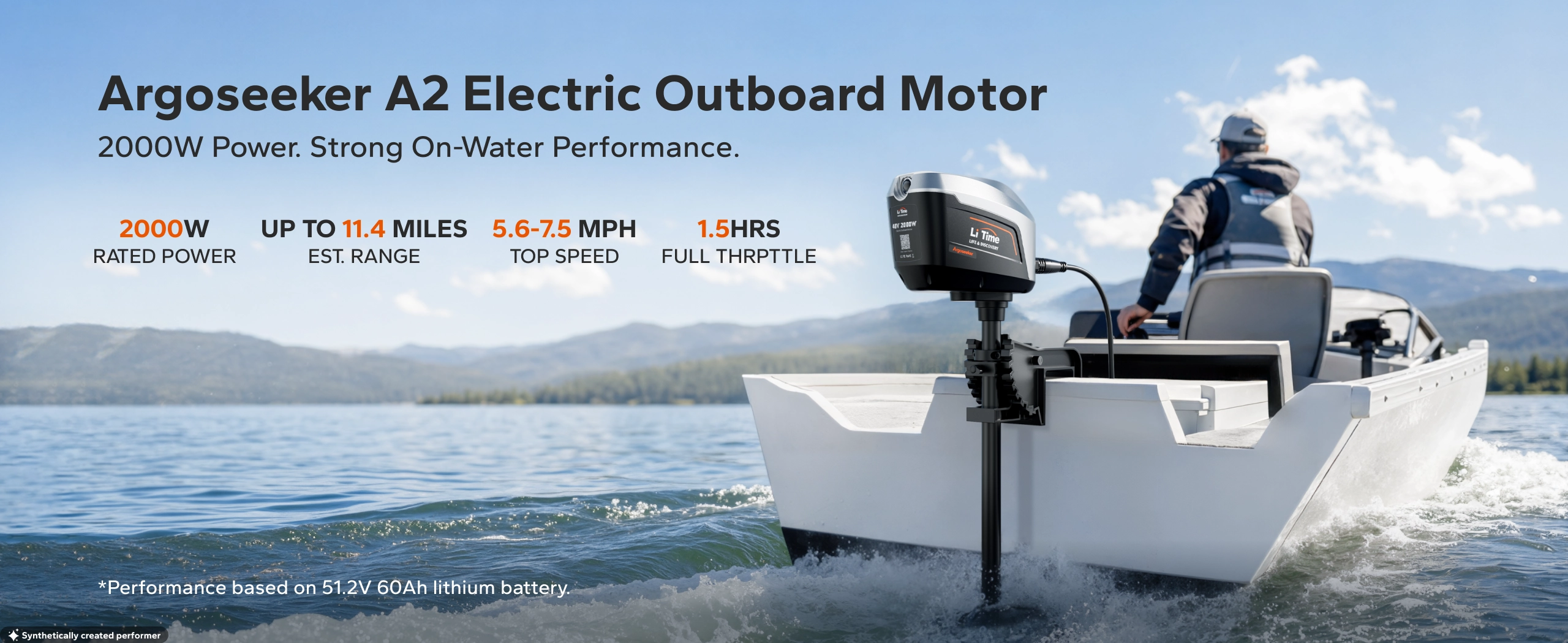
Table of Contents
- ArgoSeeker A2 Overview
- Full Specifications
- Power & Thrust: What 2000W Gets You
- Wireless Remote & Cruise Control
- Weed-Cutting Blade
- Battery & Runtime: Do the Math First
- Installation: 3-Minute Clamp-On
- ArgoSeeker A2 vs A1: Which One?
- Price & What’s in the Box
- Pros & Cons
- ArgoSeeker A2 FAQ
ArgoSeeker A2 Overview
LiTime spent years selling the batteries that power other companies’ motors. The ArgoSeeker A2 flips that around: it’s LiTime’s own complete propulsion system — motor, controller, and wireless remote in one kit, designed to pair with their 48V LiFePO4 batteries.
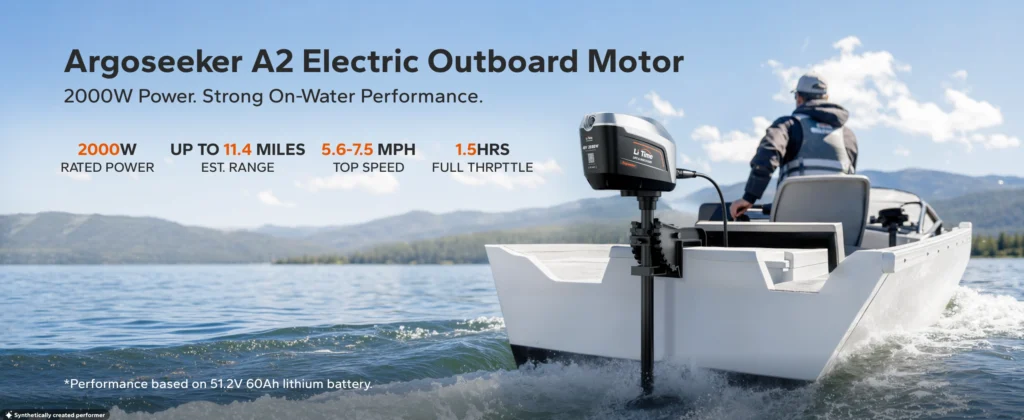
The headline numbers: 2000 watts, 120 pounds of thrust, 16.53 pounds of motor. It clamps onto a transom in about three minutes with no drilling, runs off a 48V lithium battery you supply, and steers from a wireless joystick remote with cruise control.
LiTime positions it for 13 to 20-foot skiffs, inflatable boats, and aluminum fishing boats — bigger water than the kayak-focused A1. Under LiTime’s test conditions (about 660 lbs of boat, passenger, battery, and gear), the A2 pushed 5.6 to 7.5 mph.
Full Specifications
| Spec | ArgoSeeker A2 |
|---|---|
| Rated power | 2000W (LiTime rates it “5HP equivalent”) |
| System voltage | 48V (input range 40–60V DC) |
| Maximum thrust | 120 lb |
| Motor weight | 16.53 lbs |
| Motor type | Brushless |
| Propeller | 4-blade, with integrated weed-cutting blade |
| Max current draw | 52A |
| Rated motor speed | 2500 RPM |
| Shaft depth | 28.22 in |
| Mounting | Clamp-on transom mount (no drilling) |
| Control | 2.4GHz wireless remote, joystick + cruise control, up to 65.6 ft range |
| Steering angle | 40° |
| Waterproof rating | IP68 (underwater motor) |
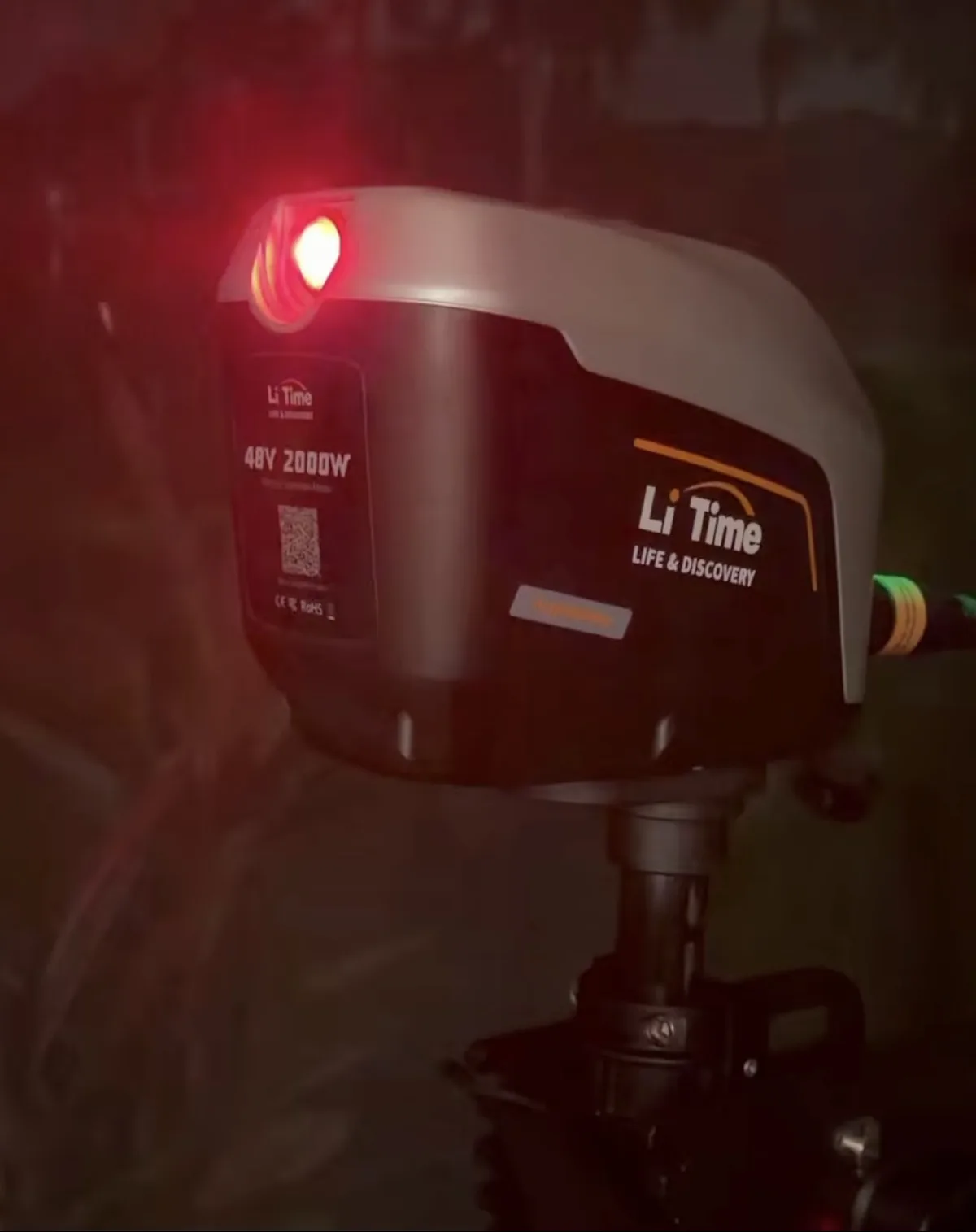
| Navigation light | Built-in red stern light on the cowling for night visibility |
| Operating temperature | 32°F to 104°F |
| Recommended battery | 48V LiFePO4 (not included) |
| List price | $2,299.99 (motor only; battery kits cost more) |
Power & Thrust: What 2000W Gets You
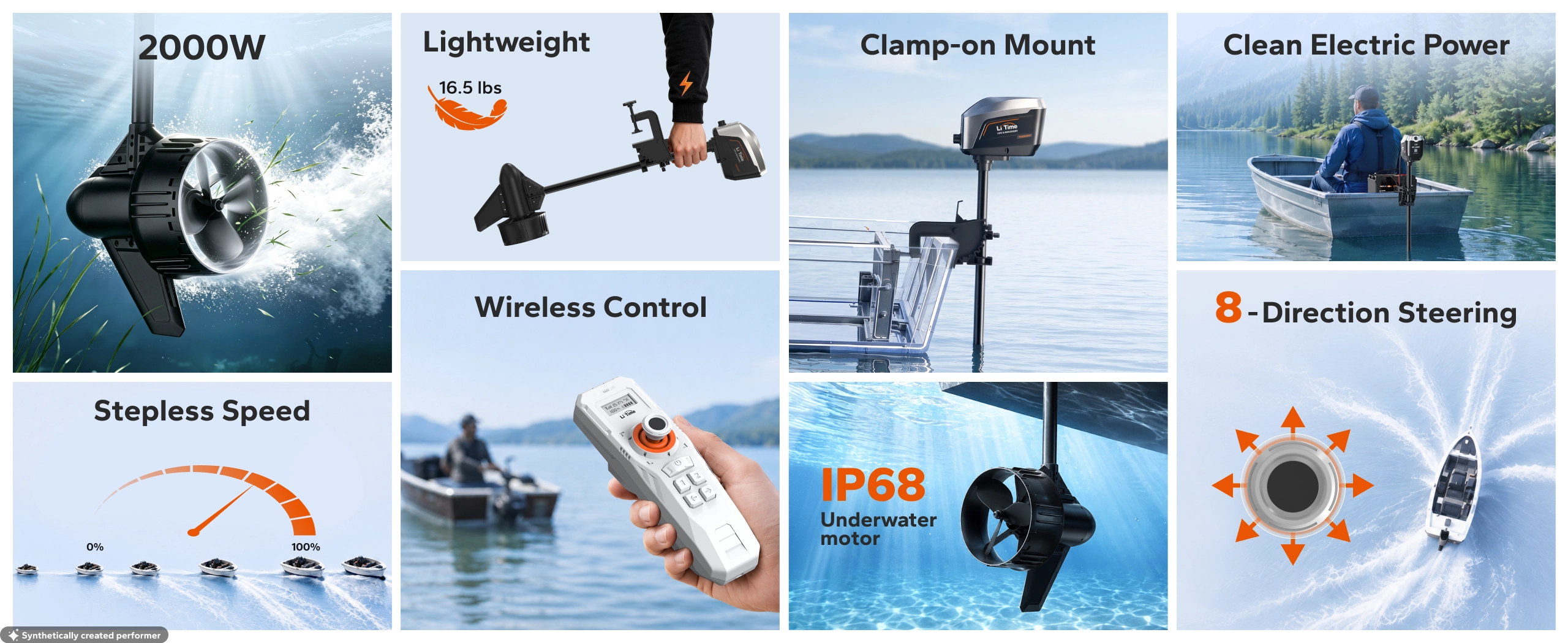
Let’s be straight about the “5HP” on the box. The honest math: 2000 watts works out to roughly 2.7 shaft horsepower. LiTime’s 5HP figure is a thrust-equivalence claim — 120 pounds of thrust pushes like a small gas outboard does at low speed. Electric motors make peak torque from zero RPM, so the push feels stronger than the wattage suggests. It’s legitimate marketing, but it’s not the same as a 5HP gas engine at wide open throttle.
What matters on the water: 120 lb of thrust on a 16.5-lb motor is a serious power-to-weight ratio. A gas 5HP weighs around 55–60 lbs. The A2 gives you comparable push at less than a third of the weight, with no fuel, no oil, and no pull cord.
Wireless Remote & Cruise Control
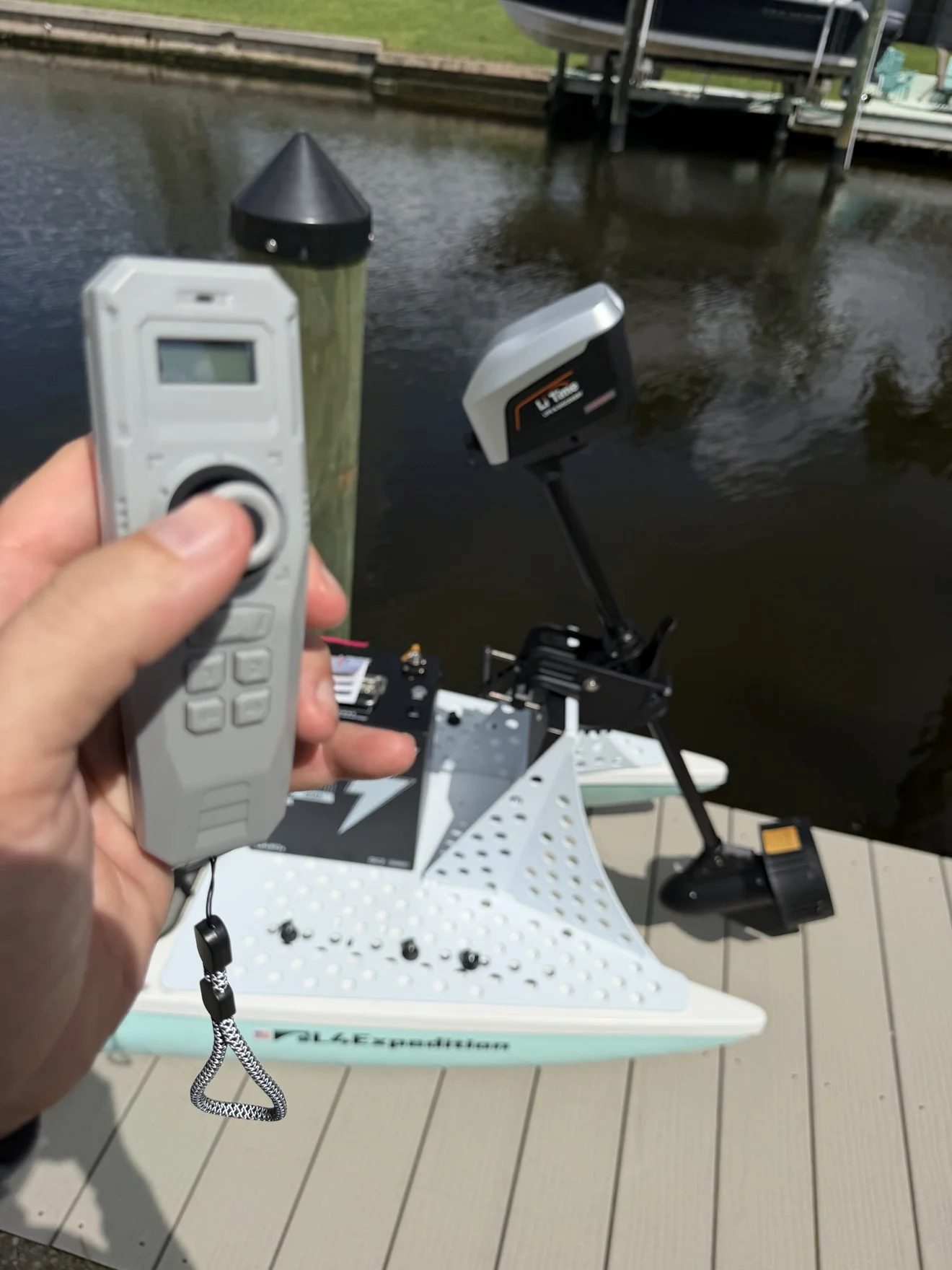
Instead of a tiller, the A2 steers from a 2.4GHz wireless remote with a joystick — throttle and steering in one hand, from anywhere on the boat within about 65 feet. Cruise control holds your speed so you’re not babysitting the throttle while you fish.
There’s a real safety backup built in: if the remote loses connection, the motor stops automatically instead of running away. You can then restart and drive it from the onboard controls.
Weed-Cutting Blade
Anyone who’s run a trolling motor through grass knows the drill: stop, tilt, unwrap, repeat. The A2’s prop assembly has an integrated weed-cutting blade that chops vegetation before it wraps tight around the prop. It won’t make the motor weed-proof, but for shallow, grassy water it’s a genuinely useful feature most competitors don’t include.
Battery & Runtime: Do the Math First
The A2 does not include a battery. It needs a 48V LiFePO4 — LiTime sells matched 30Ah, 60Ah, and 100Ah packs, or bundled kits. Budget for this; it’s the biggest hidden cost.
Quick runtime math so you buy the right size:
- 48V 30Ah (1,536Wh): roughly 45 minutes at full throttle, several hours at cruise
- 48V 60Ah (2,880Wh): roughly 1.5 hours wide open, most of a fishing day at moderate throttle
- 48V 100Ah (5,120Wh): all-day power for most anglers
These are estimates — wind, current, and load change everything. The pattern with every electric outboard: dropping to 60–70% throttle roughly doubles your range versus wide open. Cruise control makes it easy to sit in that sweet spot.
Important: Never run the A2 on a 12V battery, and don’t series-wire random batteries unless you know what you’re doing. A single 48V LiFePO4 with a proper BMS is the safe, simple setup.
Installation: 3-Minute Clamp-On
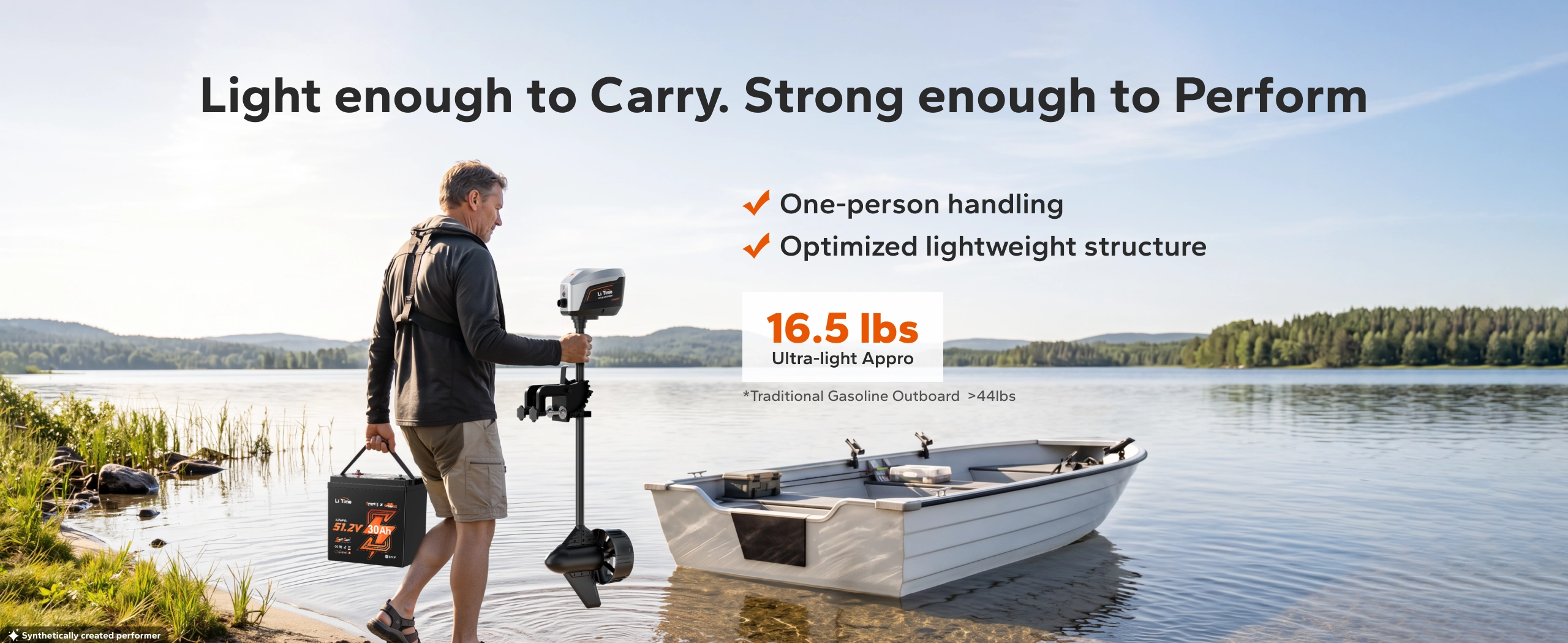
The transom mount clamps on — no drilling, no permanent mods. Clamp it, connect the battery cables, pair the remote, and you’re on the water. One person can carry the 16.5-lb motor from the truck to the transom. Pull it off just as fast for transport or storage, or to swap it between boats.
ArgoSeeker A2 vs A1: Which One?
LiTime sells two Argoseekers. The choice comes down to boat size:
- A1 (24V, 700W, 60 lb thrust, 13.45 lbs, $1,299.99): built for kayaks, canoes, and compact 10–13 ft skiffs. Lighter, cheaper, all most kayak anglers need. Read the full ArgoSeeker A1 review.
- A2 (48V, 2000W, 120 lb thrust, 16.53 lbs, $2,299.99): for 13–20 ft skiffs, inflatables, and aluminum boats carrying more weight.
Kayak anglers: start with the A1. The A2’s extra power only pays off on heavier hulls.
Price & What’s in the Box
LiTime lists the ArgoSeeker A2 at $2,299.99 for the motor kit without battery or charger. Bundles with 48V batteries and chargers cost more — check the current kit pricing before you decide.
In the box: the motor, wireless remote, fin and mounting hardware, height-adjustment lock tool, waterproof connection cable, battery M8 cable, USB charger for the remote, and fin mounting screws.
Check Current Price at LiTime →
The ArgoSeeker A2 is also listed in the KayakDIY Shop.
Pros & Cons
Pros
- 120 lb thrust at only 16.53 lbs — excellent power-to-weight
- Wireless joystick remote with cruise control and auto-stop safety
- Integrated weed-cutting blade for grassy water
- 3-minute clamp-on install, no drilling
- Brushless motor, IP68 waterproof, near-silent running
- Matched LiTime 48V battery ecosystem
Cons
- Battery not included — real total cost is higher than the sticker
- “5HP” is thrust-equivalence, not shaft horsepower
- 48V system is overkill (and heavier/expensive) for kayaks — that’s the A1’s job
- New product line with no long-term reliability record yet
ArgoSeeker A2 FAQ
How much does the LiTime ArgoSeeker A2 cost?
LiTime lists the ArgoSeeker A2 motor kit at $2,299.99 without battery or charger. Kits bundled with 48V LiFePO4 batteries cost more. Prices change — verify before buying.
Is the ArgoSeeker A2 really 5 horsepower?
Not exactly. The motor is rated 2000W, which is about 2.7 shaft horsepower. LiTime’s “5HP equivalent” refers to thrust — 120 lb of push feels comparable to a small gas outboard at low speed, since electric motors deliver full torque instantly.
What battery does the ArgoSeeker A2 need?
A 48V LiFePO4 battery (input range 40–60V DC). LiTime recommends its own 48V 30Ah, 60Ah, or 100Ah packs. The battery is not included with the motor kit.
How fast will the ArgoSeeker A2 push my boat?
Under LiTime’s test conditions (about 660 lbs total weight), the A2 reached 5.6–7.5 mph. Real speed depends on hull, load, wind, and current.
Can I use the ArgoSeeker A2 on a kayak?
You can, but it’s overkill for most kayaks. The 24V ArgoSeeker A1 is the kayak-sized option — lighter, cheaper, and plenty of thrust. The A2 suits 13–20 ft skiffs, inflatables, and aluminum fishing boats.
Does a motorized boat need registration?
In most states, yes — any motorized vessel typically needs registration, even a kayak with an electric outboard. Check your state’s boating agency before you launch.
Related Reviews
Affiliate disclosure: KayakDIY may earn a commission from qualifying purchases made through links in this article, at no additional cost to the reader. Product availability, pricing, and promo codes can change; verify them before purchasing.