
Paddle Kayaks · Fishing
The Mirage Outback is the best-selling fishing kayak in the world, and it earned that title. At 12 feet 9 inches with the MirageDrive 180, a 425 lb capacity, and a deck that comes loaded from the factory, it is the boat most anglers picture when they think of kayak fishing.
The Mirage Outback is the best-selling fishing kayak in the world, and it earned that title. At 12 feet 9 inches with the MirageDrive 180, a 425 lb capacity, and a deck that comes loaded from the factory, it is the boat most anglers picture when they think of kayak fishing.
If you want to skip ahead and see what it costs, check the current price here.
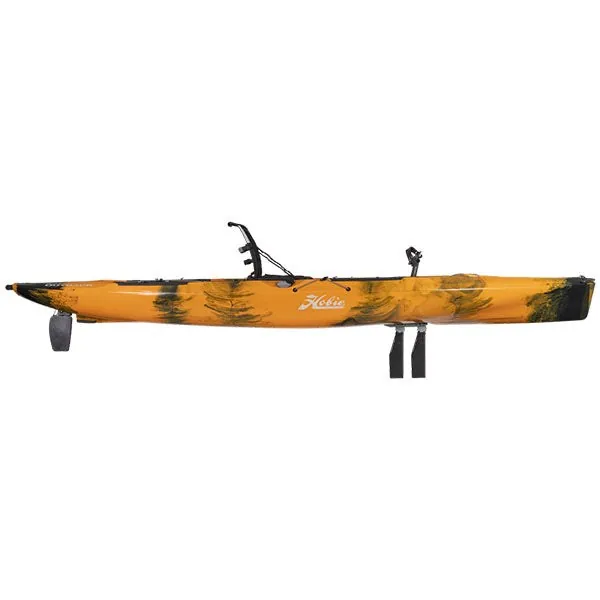
There is a reason you see more Outbacks on the water than any other fishing kayak. Hobie basically invented the pedal-drive fishing kayak, and the Outback is the boat that turned weekend anglers into pedal converts. It is not the cheapest, lightest, or fastest kayak on the market. It is the one that gets you on fish with the least fuss, trip after trip, and that is why it keeps selling.
Who the Outback Is For
This kayak is for the angler who wants to stop paddling and start fishing. If your shoulders are tired of digging a paddle while you drift past good structure, the pedal drive changes everything. Your hands stay free for casting, working a fish finder, or landing a fish, and your legs do the driving. It fits inshore saltwater anglers, bass fishermen, and anyone who covers real distance to reach their spots.
It is also for the angler who rigs a boat once and fishes it for years. The Outback comes from the factory with rod holders, gear tracks, hatches, and mounting points already in place. You can fish it stock on day one and add electronics and accessories over time without drilling a single hole.
It is not for the minimalist who wants a 50-pound boat to throw on a sedan roof solo. At 85 pounds for the bare hull, this is a truck-bed, trailer, or kayak-cart boat. And it is not for the bargain hunter. You pay a premium for the Hobie name and the MirageDrive, and there is no way around that.
The MirageDrive 180: Pedals with Reverse
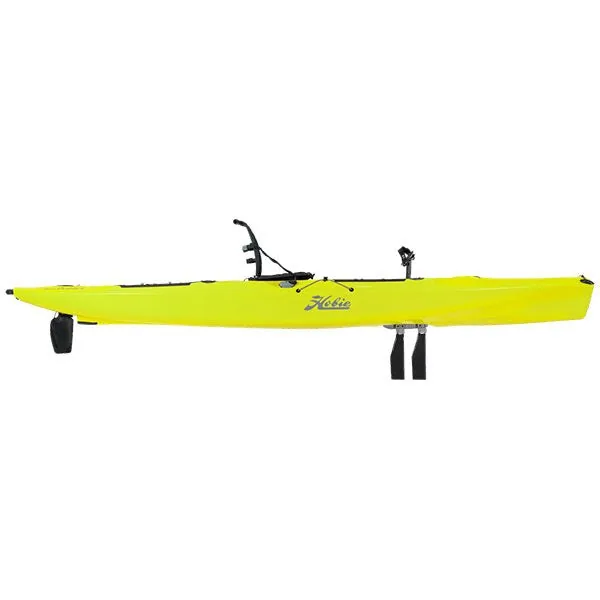
The MirageDrive 180 is the heart of this kayak. You pedal like a bicycle and two fins under the hull sweep back and forth, pushing you forward. It is quiet, efficient, and far less tiring than paddling into wind or current. Most anglers cruise comfortably at 3 to 4 miles per hour without breaking a sweat.
The 180 in the name means it does what older pedal drives could not: reverse. Pull a handle and the drive shifts into reverse, so you can back out of a tight spot, hold position on a piece of structure, or slow your drift without touching a paddle. Once you have fished with reverse, you will never want to give it up.
The fins also kick up on impact. If you pedal into a stump, rock, or shallow flat, the fins fold back instead of breaking. That one feature has saved a lot of fishing trips and a lot of repair bills.
Hobie’s fin drive also has a meaningful edge over the propeller-style pedal drives most other brands use, and it shows up in shallow water. A propeller typically sticks down a foot or slightly more below the hull and needs a foot of depth or more to spin freely — run skinny and you are either dragging it through the bottom or pulling the whole drive up. Hobie’s fins do not have that problem. They can lay almost flat against the underside of the hull and still flutter enough to keep you moving. You can pedal through water so shallow a propeller drive would be stuck in it.
Stability: A Deck You Can Stand On
At 34 inches wide with a flat, open deck, the Outback is stable enough to stand and fish. The standing area has EVA deck padding for grip, and the hull stays predictable when you shift your weight to cast or land a fish. Bigger anglers and anyone new to standing in a kayak will feel comfortable here faster than on most pedal kayaks.
That stability does cost you some speed. The Outback is not a fast hull. It tracks well with the Twist and Stow rudder down, and it handles chop and boat wakes without drama, but if you want to cover five miles in a hurry, a longer, narrower paddle kayak will get there first. For fishing, though, the trade is worth it. You are buying a stable casting platform, not a race boat.
Comfort: The Vantage Seat
The Vantage CTW seat is one of the best stock seats in kayak fishing. It adjusts for height and recline, the mesh backrest breathes on hot days, and the thermoformed seat bottom does not leave you sore after eight hours. Because your legs are pedaling instead of your arms paddling, long days on the Outback feel shorter than long days on a paddle kayak.
The seating position also puts everything within reach: the steering handle for the rudder, the reverse pull handles, and the H-Rail on each side for mounting a fish finder, rod holders, or a camera.
Storage and Rigging
The Outback comes loaded. You get a large front hatch for bulk storage, a rectangular center hatch with a tackle management system for boxes and tools, four molded-in rod holders, and a big rear tank well with bungees that swallows a crate or cooler. The H-Rail on both sides accepts standard 1-inch accessories, so mounting a fish finder or extra rod holders takes minutes.
There is also a transducer cavity under the hull with a mounting plate, which makes a clean fish finder install easy, and the hull is pre-wired with through-hull cable plugs. If you run electronics, this boat was designed with you in mind.
Honest Drawbacks
Hobie was bought out by Bass Pro Shops in 2026. There has been a period here in 2026 where parts have been scarce for pedal drives during the transition period. This has prevented many from purchasing. However, some dealers are starting to get parts in stock. Before purchasing in 2026 verify that you can find parts like replacement mirage drive fins. In 2027 we imagine parts will be much more accessible. We have spoken with the company on this topic. We are very confident in the brand.
No kayak is perfect, and the Outback has real trade-offs. The weight is the big one. At 85 pounds bare and over 100 rigged, you will want a cart, a trailer, or a buddy at the ramp. Car-topping it solo is possible but nobody enjoys it.
The price is the second one. This is a premium boat with a premium price tag, and the pedal drive is a big part of that cost. If the drive ever needs service, parts cost more than a replacement paddle.
Finally, the fins need water under them. The kick-up feature saves you from damage, but in very shallow water you will pull the drive and paddle or pole. That is true of every fin-drive kayak, not just this one.
Specs
| Spec | Detail |
|---|---|
| Length | 12′ 9″ |
| Width | 34 in |
| Weight | 85 lbs hull, 103 lbs fully rigged |
| Capacity | 425 lbs (275 lbs seat capacity) |
| Drive type | MirageDrive 180 Turbo with Kick-Up Fins |
Hobie Mirage Outback Fishing Kayak FAQ
Does it have reverse?
Yes. The MirageDrive 180 shifts between forward and reverse with a pull handle.
Can you stand and fish in the Outback?
Yes. The 34-inch-wide hull and flat, padded standing deck make it one of the easier pedal kayaks to stand in.
How heavy is the Hobie Outback?
The bare hull weighs about 85 pounds, and a fully rigged boat runs around 103 pounds. Plan on a kayak cart, trailer, or truck bed rather than car-topping it solo.
Is the Outback good for saltwater?
Yes, it is one of the most popular inshore saltwater kayaks made. Rinse the drive and hardware with fresh water after each trip to keep everything working smoothly.
What happens if the fins hit something shallow?
The Kick-Up Fins fold back on impact instead of breaking, so stumps and rocks are a scare rather than a repair bill.
Where to Buy
If the Hobie Mirage Outback Fishing Kayak sounds like your kind of boat, check the current price:
Affiliate disclosure: KayakDIY may earn a commission from qualifying purchases made through links in this article, at no additional cost to the reader. Product availability, pricing, and promo codes can change; verify them before purchasing.