Electric Kayaks · On-Water Review
FluxJet hides its electric jet drive inside an 11-foot fishing platform, eliminating an exposed prop, shaft, and rudder. Our on-water first look explains where that design helps—and what buyers still need to budget for.
Affiliate disclosure: KayakDIY may earn a commission from qualifying purchases made through links in this article, at no additional cost to the reader. Product availability, pricing, and promo codes can change; verify them before purchasing.
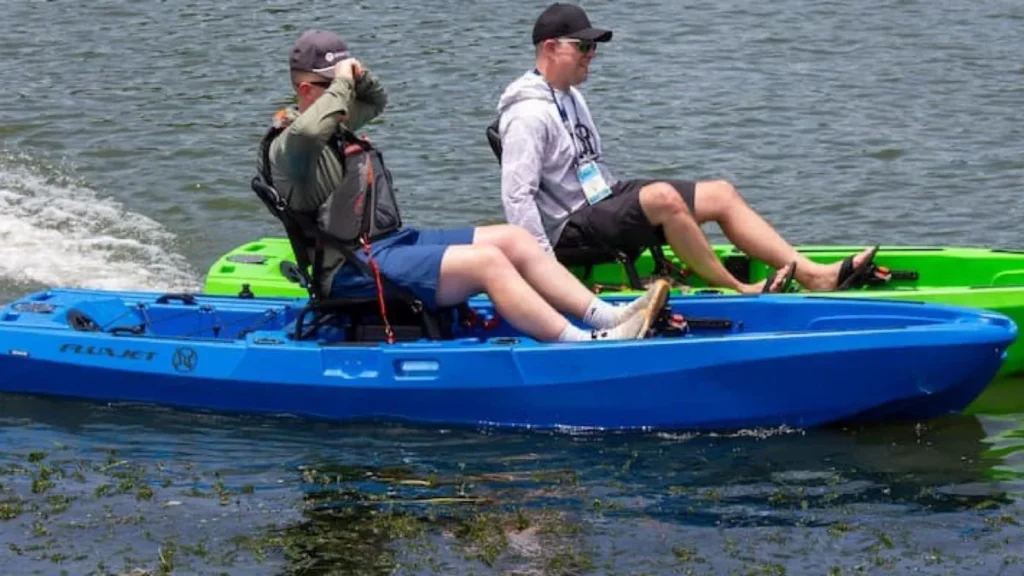
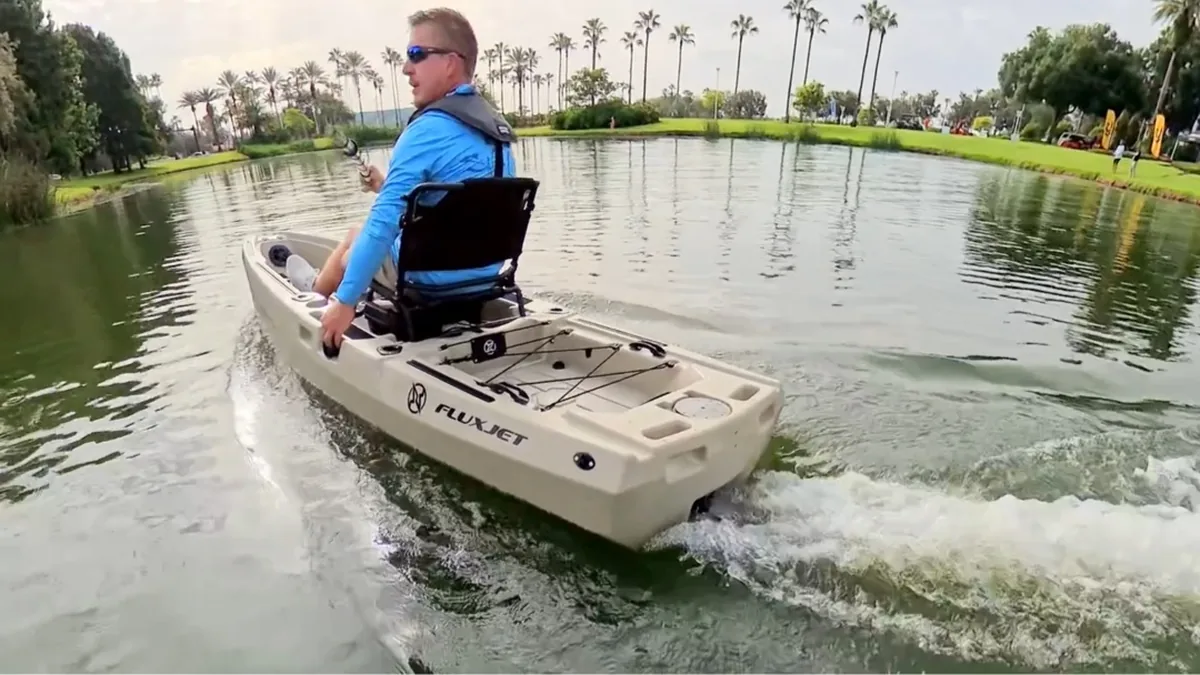
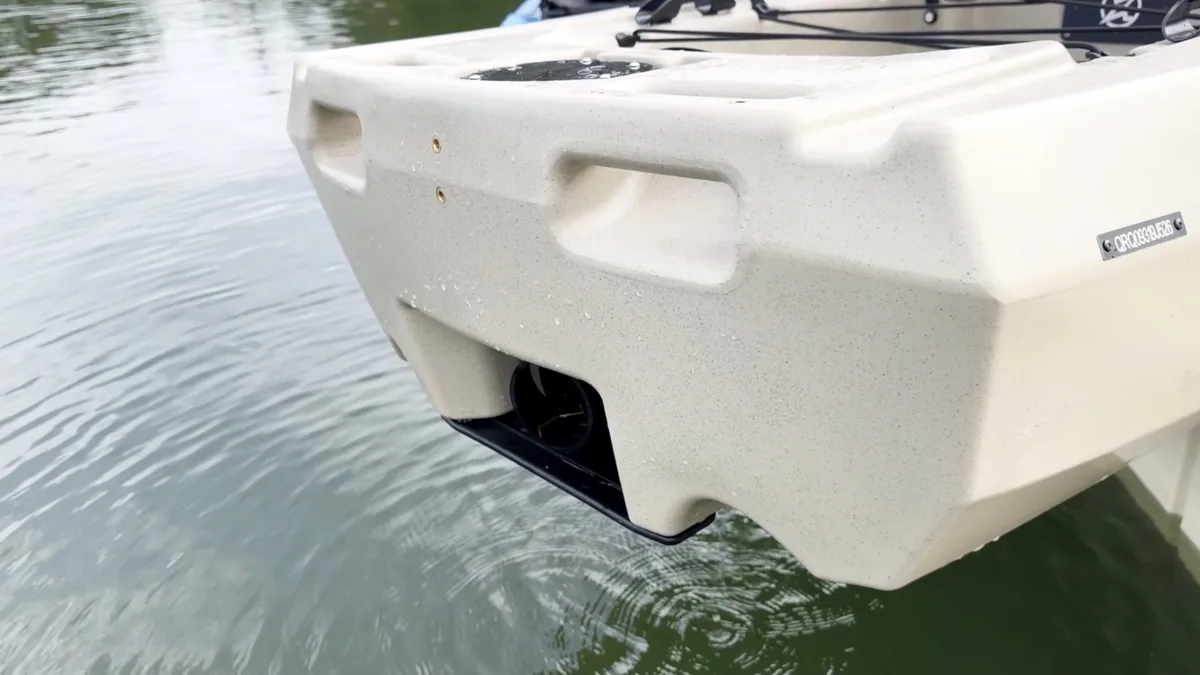
This FluxJet kayak review focuses on a problem that appears the moment a motorized fishing kayak enters shallow grass: exposed props, shafts, fins, and rudders catch weeds or hit bottom. FluxJet integrates the drive inside the hull and directs thrust through a steering nozzle, leaving the underside comparatively clean. On our test boat, that translated into the ability to cross a weed bed, turn tightly, and keep fishing line away from external propulsion hardware.
This is a complete purpose-built electric fishing kayak, not a motor kit strapped to a conventional hull. The current $3,499 price includes the installed jet drive and electronics, but not the battery, charger, shipping, or registration costs. That distinction matters when comparing it with a normal kayak plus an aftermarket motor.
Watch the FluxJet on-water review
FluxJet kayak review: quick specs
| Specification | Current detail |
|---|---|
| Price | $3,499 total; motor included, battery excluded |
| Dimensions | 132 × 35 × 12 in / 11 ft long |
| Hull material | Rotomolded HDPE |
| Bare hull weight | 88 lb |
| Fitted / rigged weight | 112 lb fitted; 122 lb with seat and battery box |
| Capacity | 400 lb, including battery, paddler, gear, and non-standard equipment |
| Battery compatibility | 12–60 V fully charged, Group 31-size box; FluxJet recommends 36 V for the full performance profile |
| Published speed | 6+ mph depending on battery, load, water, and conditions |
| Draft | Approximately 4 in, according to FluxJet |
| Warranty | Two years on parts per the current product page |
Why a jet drive changes shallow-water fishing
A conventional trolling motor places a propeller below the kayak. Even when it is weedless by propeller standards, grass can wind around the hub and the shaft still needs clearance. FluxJet’s impeller and intake sit within the hull profile. There is no external propeller to strike a submerged object or snag a loose fishing line, and mechanical reverse can help clear debris from the intake.
Important: That does not make the kayak invincible. Sand, rocks, line, and hard debris can still damage marine equipment, and the manufacturer says reverse is not a braking system. The benefit is reduced exposure and a cleaner underside—not permission to run blindly through every obstacle.

Steering and on-water handling
Foot pedals control the steering nozzle through cables, leaving both hands available for casting or landing a fish. The video test showed a tight turning radius and quick directional changes. A hand throttle sits low and flat beside the seat to reduce line snags. FluxJet also offers a FluxLink foot-control approach for anglers who want propulsion control at the pedals.
Standing stability and fishing layout
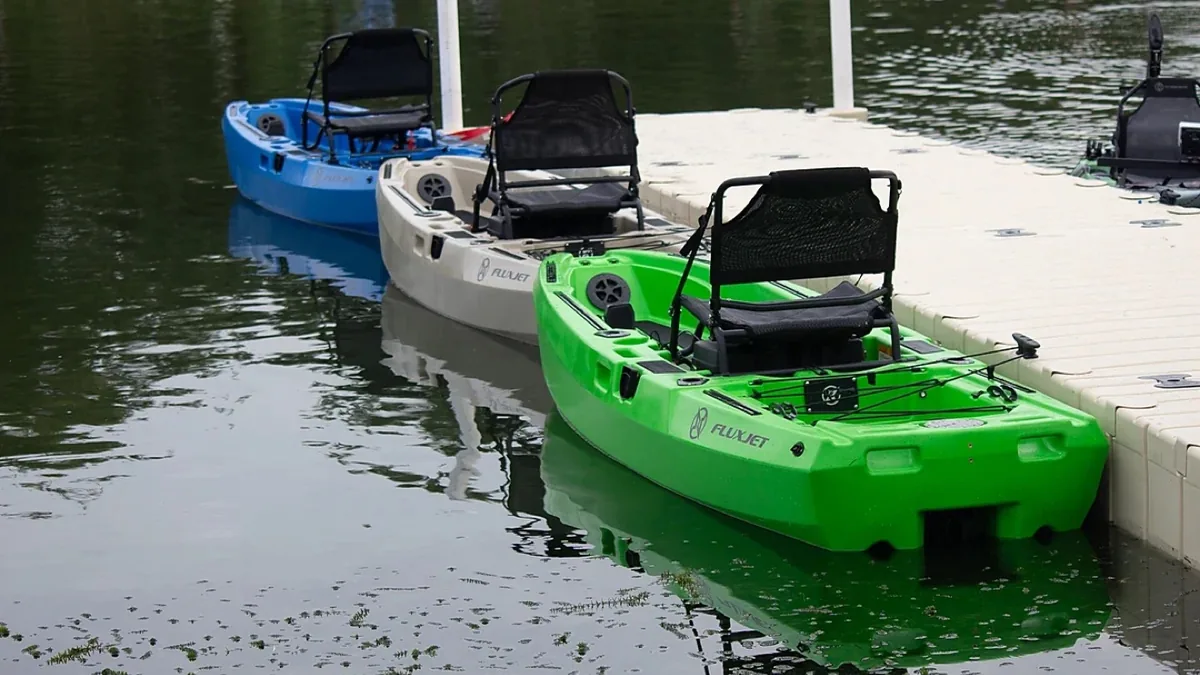
At 35 inches wide, the hull provides a broad standing platform without becoming excessively long. The test boat felt stable while standing and left generous legroom for a tall paddler. Gear tracks run along the cockpit and stern, molded rod holders are within reach, and the deck edges stay low and rounded to keep line from wrapping around hardware.
Battery choice: 12, 24, or 36 volts?
FluxJet accepts batteries from 12 to 60 volts, provided the fully charged voltage and physical size remain within the manufacturer’s limits. The integrated box has approximately 14 × 6.8 × 9.8 inches of internal space. Voltage changes the experience substantially.
12 volts
FluxJet publishes about 3.8 mph and positions it as the calm-water utility option.
24 volts
The company publishes about 4.9 mph as a middle-ground configuration.
36 volts
FluxJet’s recommended performance setup, with an expected 6 mph top speed and better efficiency under heavier loads.
Capacity should be compared in watt-hours, not amp-hours alone: voltage multiplied by amp-hours equals total watt-hours. Also verify the battery-management system, continuous-current rating, connectors, breaker, charger, and physical restraint. Never assume a battery is compatible because it fits the box.
What does real-world range look like?
Range depends heavily on speed, load, wind, current, battery size, and electronics. FluxJet’s published 36-volt lake test used a 50Ah battery, carried a combined 317-pound load, powered a Garmin display and charging devices, covered 14.42 miles during five and a half hours of mixed use, and returned with 55 percent battery remaining. That is useful evidence, but it is not a guaranteed range for every owner or a full-throttle endurance number.
What is included—and what still costs extra?
Included
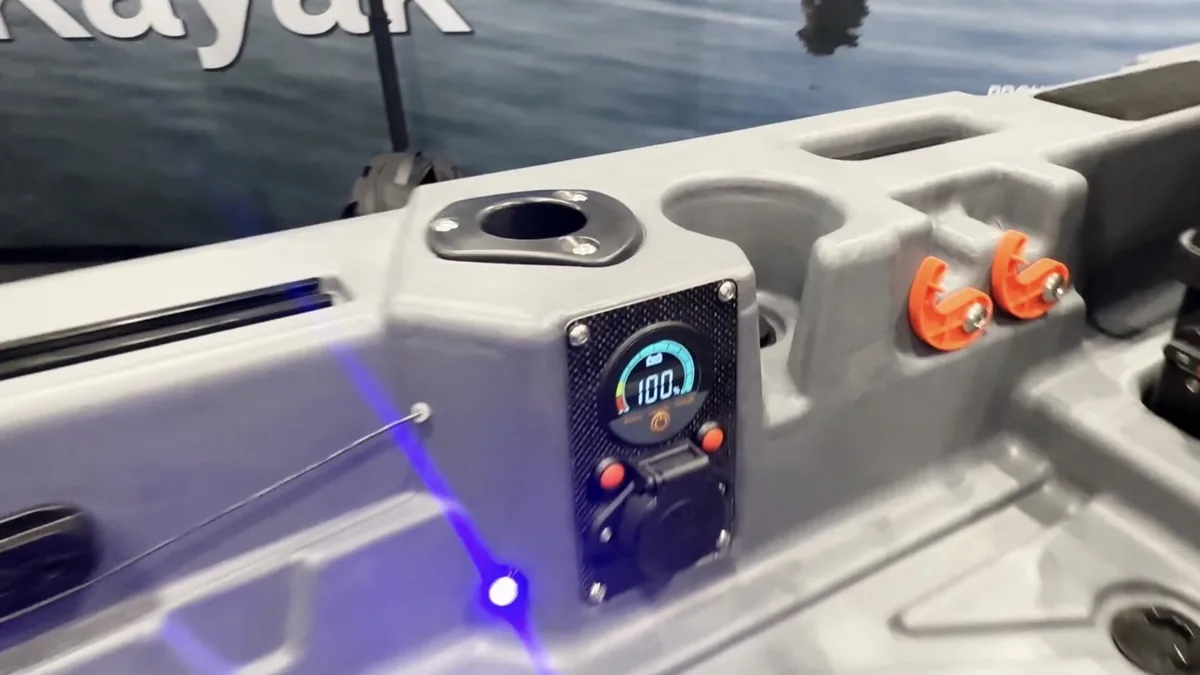
Hull, installed FluxDrive motor, foot steering, throttle, controller, wiring, magnetic kill switch, navigation and cockpit lights, power panel, seat, battery box, rails, rod holders, and transducer cover plate.
Not included
Battery, matched charger, paddle, PFD, fish finder or transducer, shipping, taxes, and any state registration or titling fees.
Relevant battery links
Shop LiTime batteries Code KayakDIY6 may apply; verify current terms and exact compatibility.
Shop WattCycle batteries The supplied video notes code KAYAKDIY; verify the current discount and compatibility.
Pros and tradeoffs
Pros
- Flush propulsion is well suited to weeds, shallow flats, and line management.
- The complete system is integrated and ready for common fishing accessories.
- Flexible battery voltage lets owners prioritize cost, speed, or endurance.
Tradeoffs
- At 122 pounds rigged before the battery, transport may require two people or a cart.
- Battery, charger, freight, and registration can raise the real purchase cost.
- A jet system still needs inspection and maintenance; “weed-ready” does not mean maintenance-free.
Final verdict
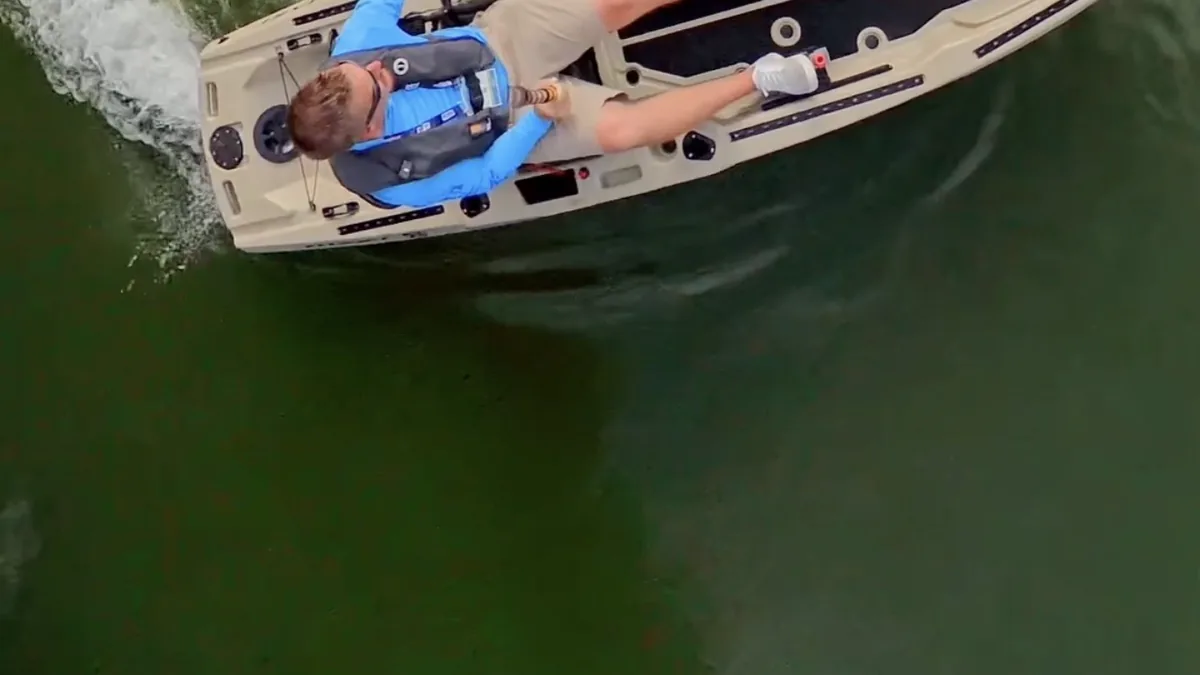
This FluxJet kayak review finds the platform most compelling for anglers who repeatedly fight grass, shallow water, or exposed motor hardware. The 11-foot hull is stable and fishing-friendly, the steering is intuitive, and the propulsion is part of the kayak rather than an afterthought. The buyer must still plan for weight and battery cost, but the current $3,499 package compares more fairly with a fully rigged motorized kayak than with a basic paddle hull.
Frequently asked questions
How fast is the FluxJet kayak?
FluxJet publishes 6-plus mph with an appropriate battery and conditions. The company’s FAQ lists lower approximate speeds for 12- and 24-volt setups.
Does the FluxJet include a battery?
No. The motor and battery box are included, but the owner supplies a compatible battery and charger.
Can FluxJet run through weeds?
The flush intake and internal impeller are designed to reduce weed and line snags compared with exposed propulsion. Reverse can help clear debris, but the intake should still be inspected.
Can it be used in saltwater?
FluxJet says the kayak is saltwater-rated and uses ceramic bearings in the jet drive. Rinse and maintain it according to the owner’s manual after saltwater use.
Does a motorized kayak need registration?
Rules vary by jurisdiction, but motorized vessels commonly require registration. Check the agency responsible for boating where the kayak will be used.
Where to Buy
If the FluxJet kayak sounds like your kind of boat, check the current price:
Prefer to buy direct from the manufacturer?
Sources and verification
- KayakDIY FluxJet on-water review — supplied transcript and firsthand test.
- Official FluxJet product page — current price, inclusions, and specifications.
- FluxJet battery guide — manufacturer voltage guidance.
- FluxJet 36V lake test — manufacturer-reported range test.