Smart Kayaks · ICAST 2026 First Look
The compact MOSSA 97 combines manual pedaling, electric assist, GPS anchoring, and cable-free 360-degree steering in one removable XPDL drive. Here is what stood out at ICAST 2026.
Affiliate disclosure: KayakDIY may earn a commission from qualifying purchases made through links in this article, at no additional cost to the reader. Product availability, pricing, and promo codes can change; verify them before purchasing.
This VoyaX MOSSA 97 review begins with an important distinction: it is not simply a pedal kayak with a motor added to the stern. Its XPDL system combines a pedal drive, electric propulsion, GPS position holding, and 360-degree electronic steering in one drop-in unit. Instead of installing a separate trolling motor, steering cables, battery box, and GPS anchor system, the angler can deploy a single drive and control it from the seat. For the battery, I recommend the WattCycle 12V 100Ah mini LiFePO4 battery with Bluetooth — it runs most 12V trolling motors up to 55lb thrust plus a fish finder, and it’s compact and light.
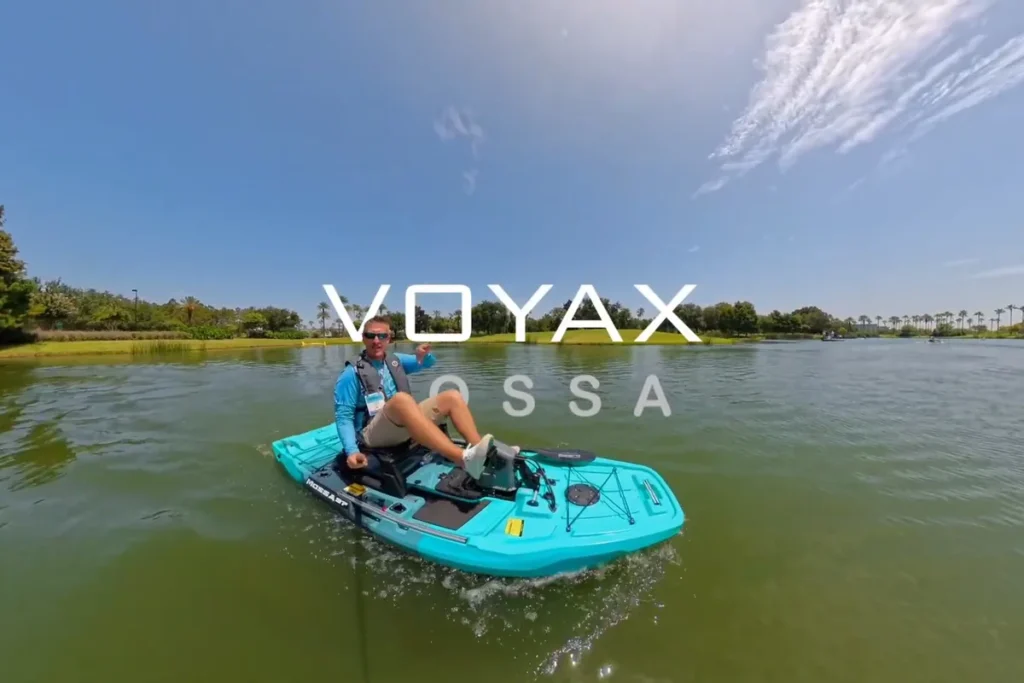
At ICAST 2026, the smaller MOSSA 97 drew attention because it puts that system into a 9.7-foot hull with a 40.5-inch beam and 400-pound capacity. It is the compact sibling to the MOSSA 128, trading some speed, storage, and load space for easier solo transport and a remarkably stable footprint.
Watch the MOSSA 97 and MOSSA 128 first look
VoyaX Mossa 128: GPS Spotlock 360 pedal drive new features
VoyaX MOSSA 97 review: quick specs
| Specification | Current detail |
|---|---|
| Length | 9 ft 7 in |
| Width | 40.5 in |
| Capacity | 400 lb |
| Approx. weight | About 100 lb as stated during the ICAST walkthrough; verify the final published weight. |
| Drive | VoyaX XPDL integrated pedal, electric, and GPS drive |
| Steering | Cable-free, infinite 360-degree electronic steering |
| Drive modes | Manual pedal, Sync Assist, and full electric with powered reverse |
| Battery | 48-volt smart-battery system shown, with one or two battery positions |
| Pricing | $2,999 early-bird listing and $3,499 MSRP on the official shop at the time of research |
What makes the XPDL system different?
The XPDL drive is the heart of the MOSSA platform. It drops into the hull and is designed to be ready in about a minute. Because steering happens inside the drive, there is no conventional rudder cable running to the stern and no hard stop in the steering range.
- Manual mode lets the angler pedal without electric propulsion while retaining the system’s steering functions when power is available.
- Sync Assist adds electric torque to each pedal stroke, similar to the feel of an e-bike.
- Full Electric mode provides powered forward speeds and reverse without continuous pedaling.
- SpotHold uses satellite positioning to maintain a fishing position in wind or current.
- Advertised navigation modes include Track Cruise, Spot Cruise, and Course Lock.
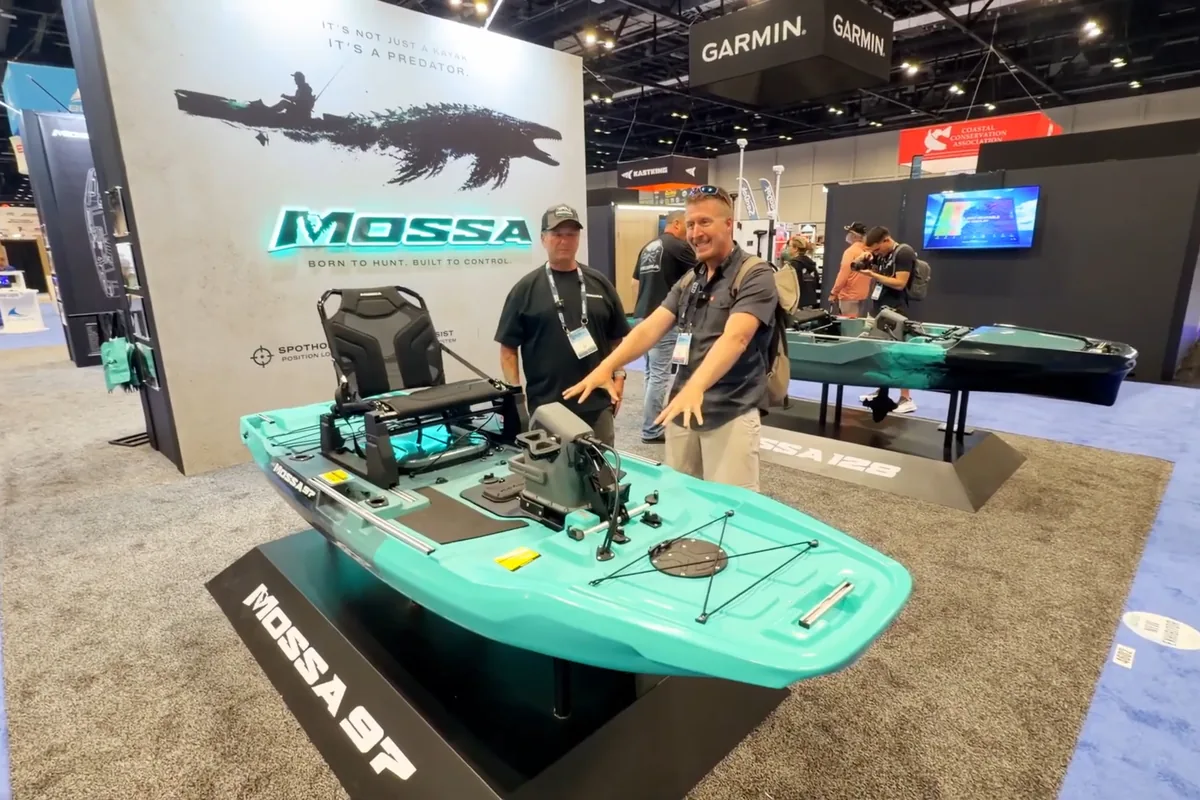
Knob 360 control and hands-free positioning
The seat-side Knob 360 controller handles steering, drive mode, power level, SpotHold, and a customizable shortcut. The control concept is especially useful when fishing tight cover: rotate the drive to point the kayak where you want to move, then release the knob and return both hands to the rod. The system can also reverse its control orientation when the drive is facing backward so left and right remain intuitive.
Compact hull, serious stability
A 9.7-foot kayak normally suggests easy storage but limited standing confidence. The MOSSA 97 changes that equation with a 40.5-inch beam and a broad, elevated deck. During the supplied walkthrough, a 6-foot-2-inch, 200-plus-pound tester described it as rock solid underfoot. The tradeoff is predictable: the shorter, wider 97 should give up some straight-line efficiency to the 128, but it should be easier to store, launch, and maneuver around docks or shoreline cover.
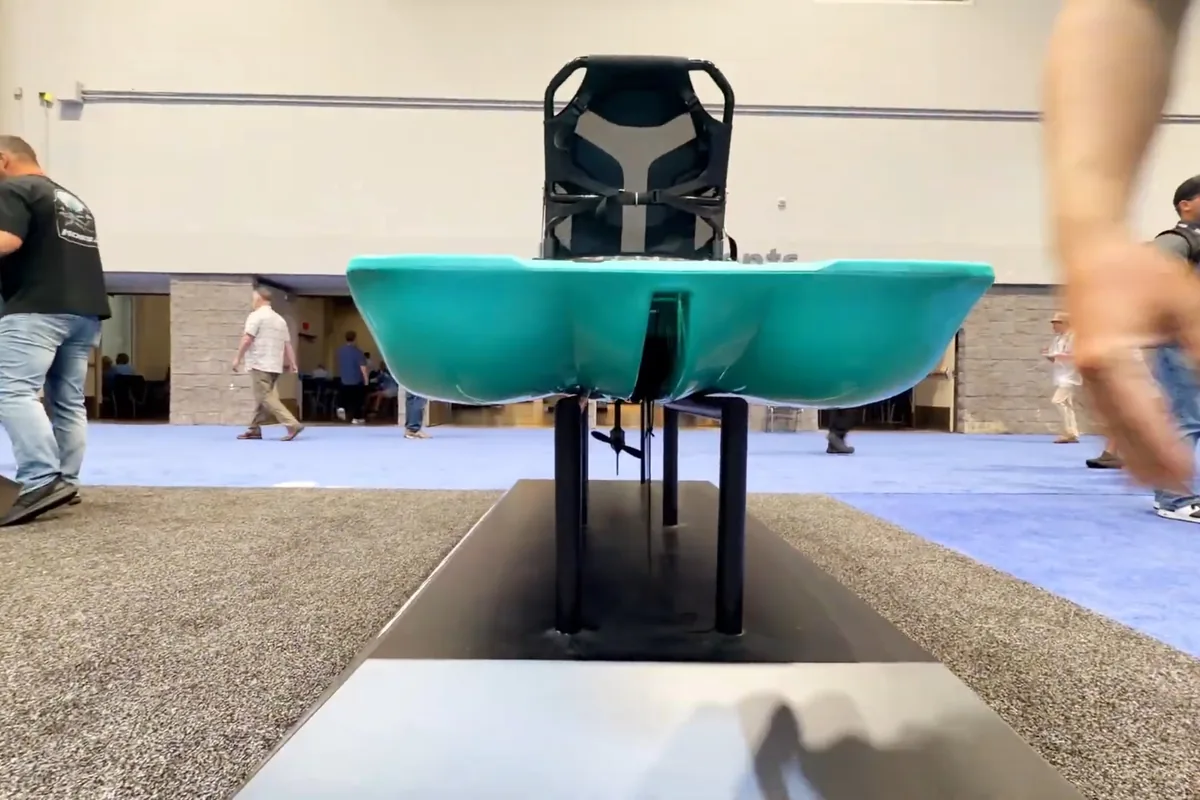
Storage, batteries, and electronics
The bow hatch opens to usable storage, and the battery compartment is designed to accept one or two VoyaX smart batteries. The prototype display showed a control screen capable of drive information and sonar views. Package contents are still important to verify: the ICAST discussion described a display and transducer-ready arrangement, while the current VoyaX shop separately lists a fish finder accessory. Treat the final electronics bundle as a dealer question, not an assumption.
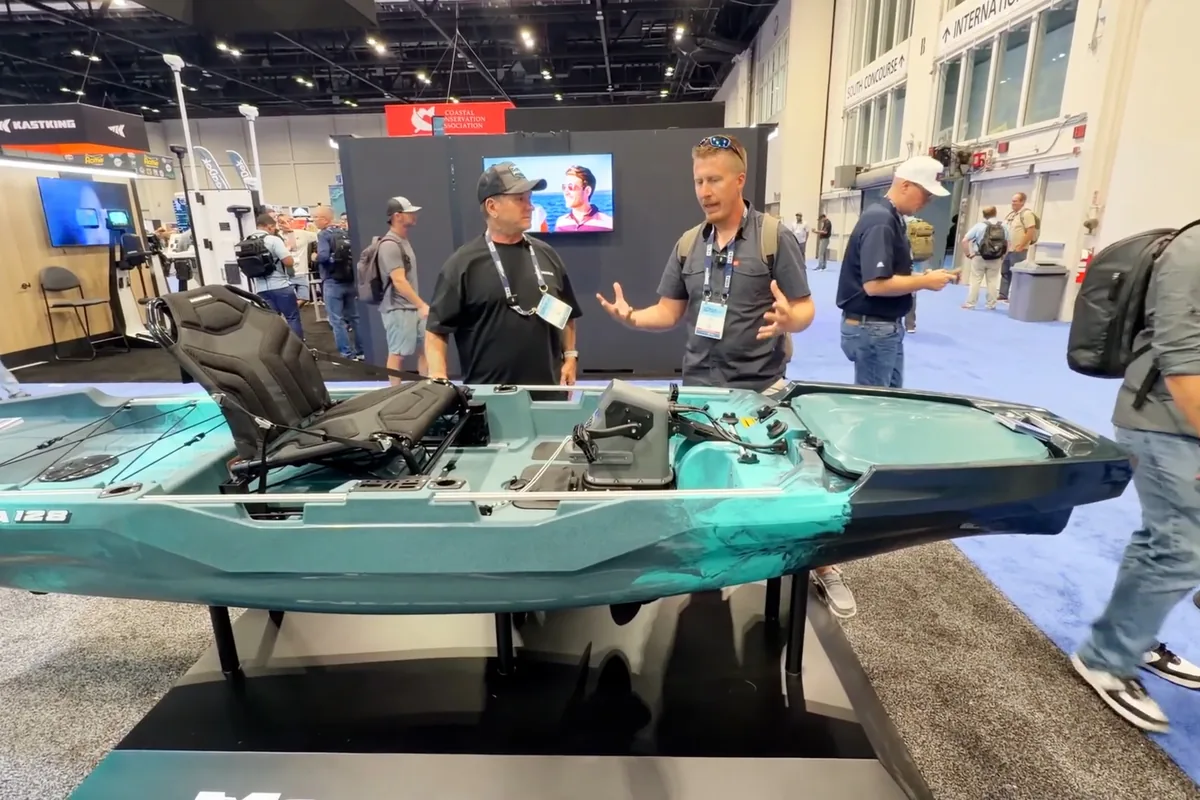
MOSSA 97 versus MOSSA 128
Choose the 97 if storage and launch logistics are the deciding factors. Choose the 128 if you routinely carry a larger fishing load, want more hull speed, or prefer additional deck and cargo room. Both use the XPDL concept, so this is primarily a hull-size decision rather than a choice between smart and non-smart propulsion.
MOSSA 97
Easier solo handling, a wider-for-length feel, 400-pound capacity, and a lower purchase price.
MOSSA 128
A longer platform with more storage and rigging space, higher load capability, and likely better cruising efficiency.
Who should consider the MOSSA 97?
- Anglers who want GPS anchoring without bolting a separate bow motor to a compact kayak.
- Fishers who alternate between exercise, assisted pedaling, and full-electric travel.
- Owners with limited storage who still want a standing-friendly deck.
- Buyers comfortable with a new technology platform who will confirm service, parts, app support, and final package contents.
First-look verdict
This VoyaX MOSSA 97 review finds that the kayak’s strongest argument is integration. Plenty of kayaks can be motorized; far fewer combine pedal assist, full electric power, SpotHold, navigation tools, and unrestricted steering in a single removable drive. The compact hull makes the idea even more interesting. The questions are the normal ones for a new smart platform—long-term reliability, dealer support, battery replacement cost, and exactly which electronics are included—but the feature set is genuinely different from a conventional pedal kayak.
Frequently asked questions
What is the VoyaX MOSSA 97?
It is a compact electric pedal-assist fishing kayak built around VoyaX’s XPDL drive, which combines manual pedaling, electric propulsion, GPS anchoring, and electronic steering.
Does the MOSSA 97 have GPS SpotHold?
Yes. SpotHold is a core XPDL feature and is controlled from the seat-side Knob 360 controller.
Can the MOSSA 97 still pedal if the battery is low?
The drive includes a manual pedal mode. Electronic steering still requires available system power, so owners should understand the low-power behavior and always carry a paddle.
How much does the MOSSA 97 cost?
The official shop showed a $2,999 early-bird price and a $3,499 MSRP at the time of research. Pricing and availability can change.
Is a fish finder included?
The ICAST prototype showed integrated display functions, but the current shop also lists a fish finder accessory. Confirm the exact production package with VoyaX or an authorized dealer.
Sources and verification
- KayakDIY VoyaX MOSSA video — supplied transcript and ICAST walkthrough.
- VoyaX MOSSA platform page — official XPDL features and model positioning.
- Official MOSSA 97 shop listing — pricing and availability reference.